
How can international collaboration between public institutions and universities accelerate digital innovation in urban planning, participation, and resilience?
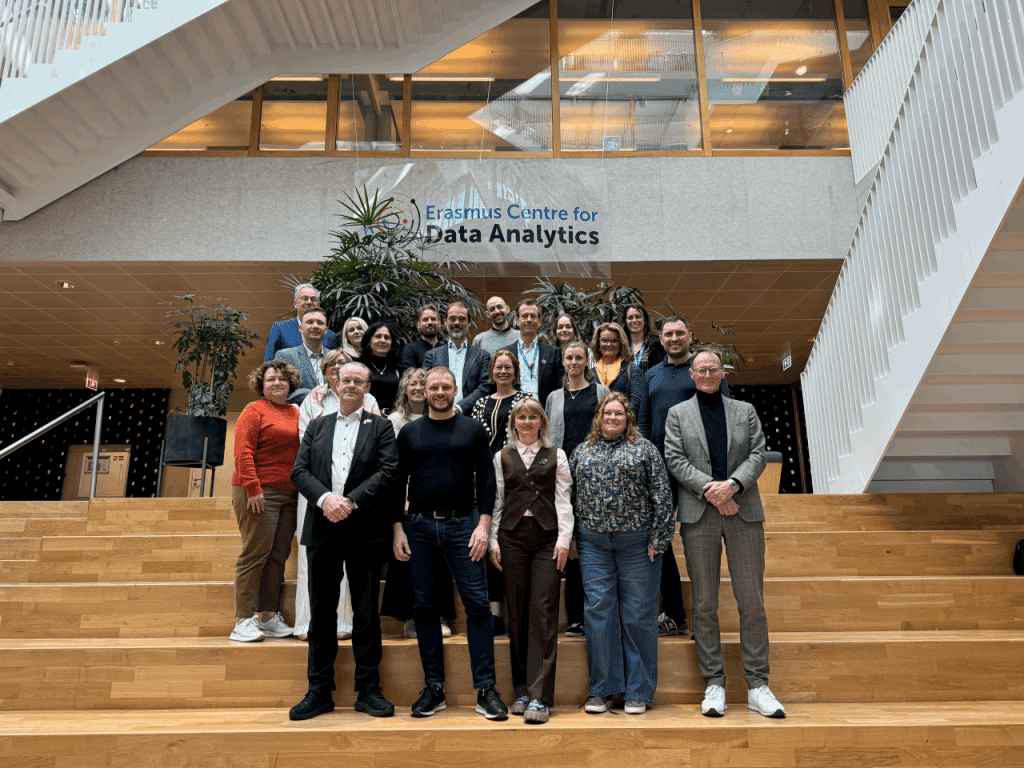
This week, we had the pleasure of welcoming representatives from Umeå (Sweden), Rotterdam, and Cherson (Ukraine) to Erasmus University Rotterdam as part of the Cherson–Umeå–Rotterdam delegation visit.
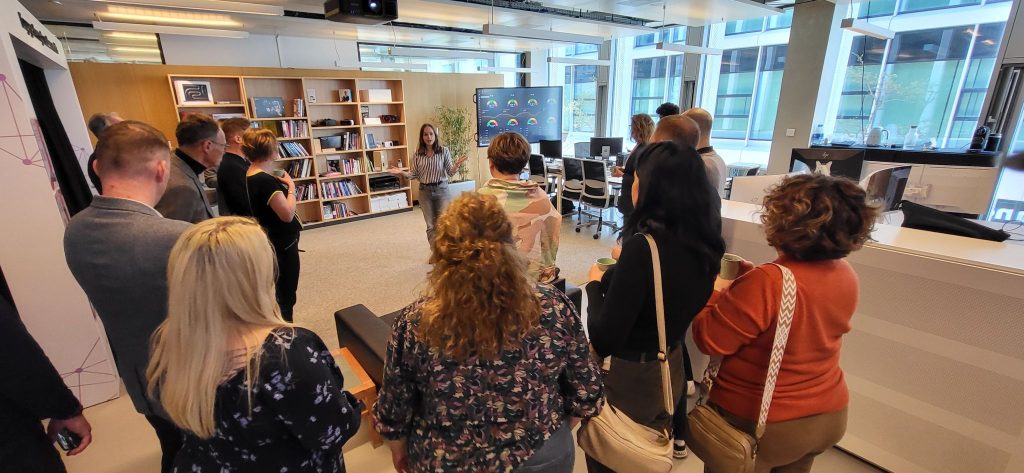
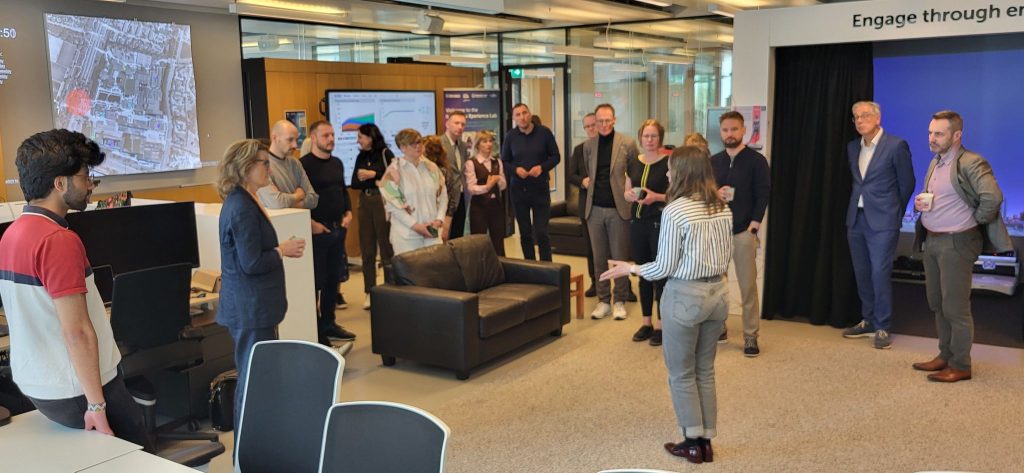
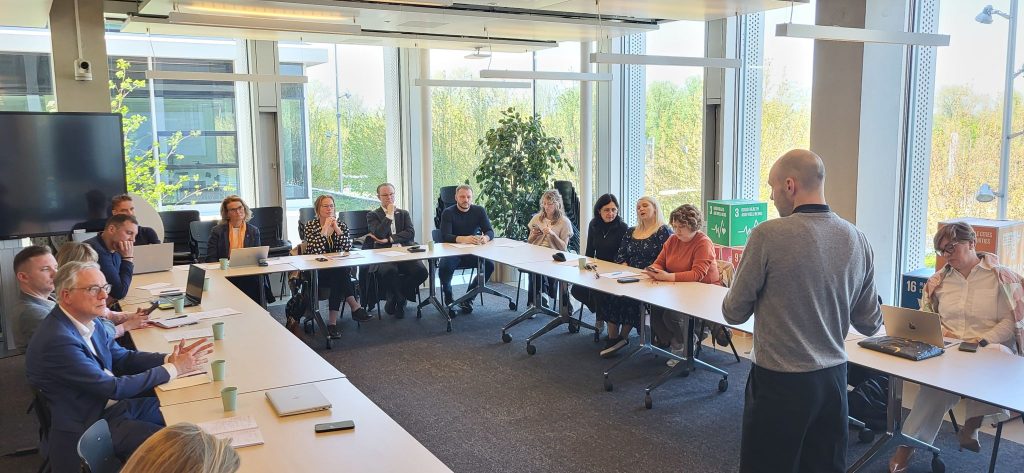
We gathered at the Erasmus Data Collaboratory| House of AI and the Immersive Xperience Lab for an inspiration session, where we discussed how shared data and digital technologies can support cities and societies in resilience, urban planning, and (re)construction.
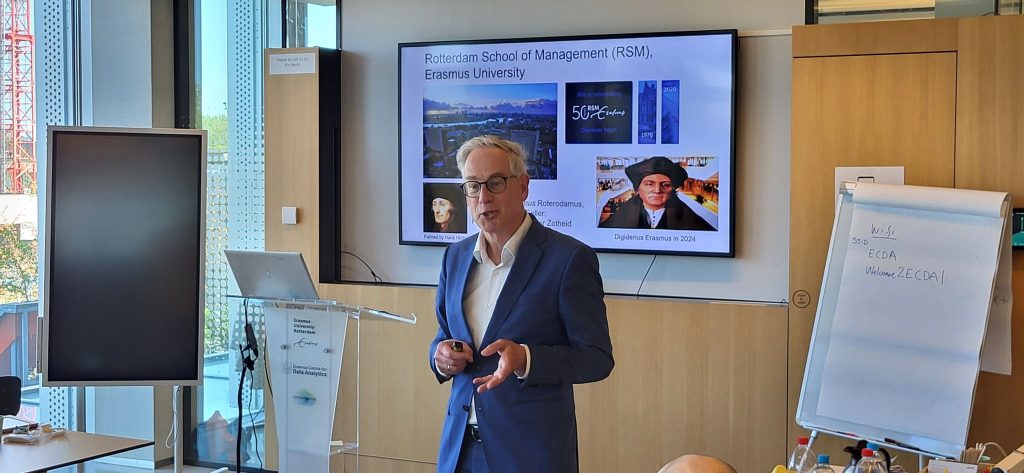
The visit opened with a warm welcome by Albert Engels (Gemeente Rotterdam). This was followed by an introduction to EUR and our major research initiatives by Anca Miclea (Erasmus University Rotterdam), and a presentation on ECDA and the Sociaal AI Lab Rotterdam by Marcel van Oosterhout.
Key Takeaways
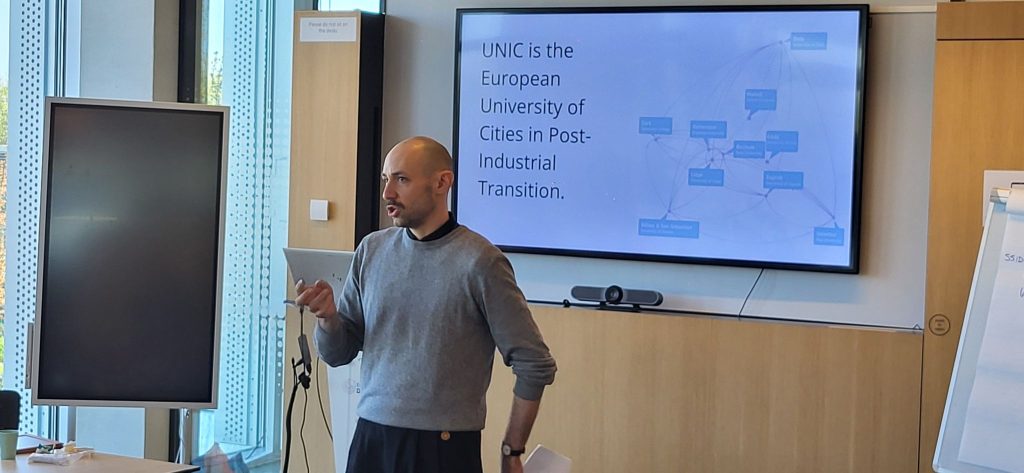
- Marco Aperti (UNIC (European University of Cities in Post-Industrial Transition)) highlighted the importance of collaboration across European cities and universities.
- Eric van Heck (Erasmus University Rotterdam) explained how cities can move from rapid (re)construction to long‑term regeneration. He highlighted how integrating data, AI, and digital technologies can reduce fragmentation in urban development and strengthen coordination and collaboration. Combining AI data with human values supports safer and more inclusive urban development.
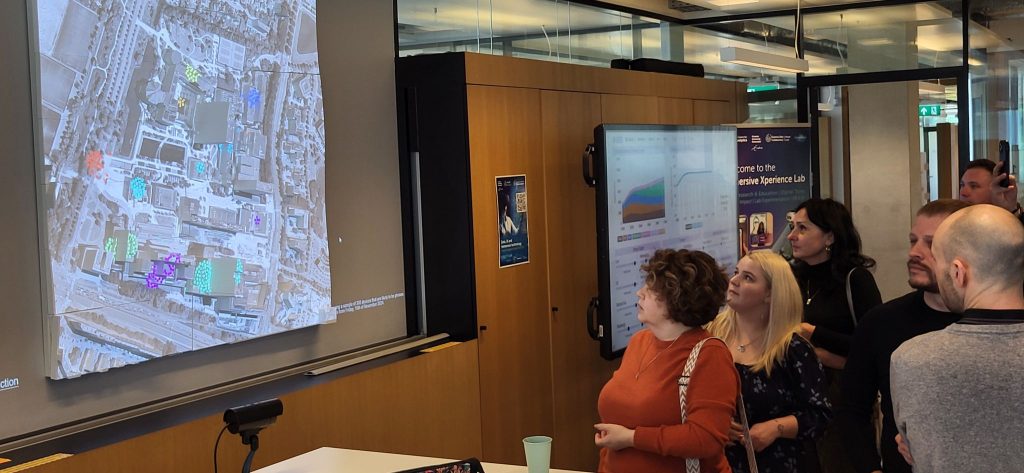
- Guided by Marie Kegeleers (IXL) and Jos van Dongen (Erasmus Data Collaboratory), our guests took part in hands‑on demos and experiences. They explored how digital and immersive technologies can support public decision‑making and community engagement. The experiences included: a VR water‑level simulation, interaction with digital human Digiderius, and a 3D holographic digital twin of Rotterdam.
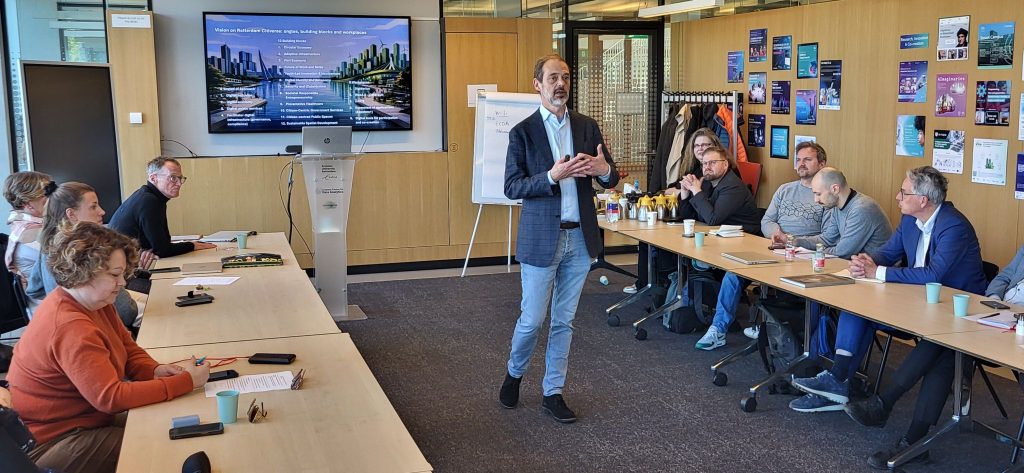
- Roland van der Heijden (Gemeente Rotterdam) presented the Rotterdam Citiverse program, showcasing how the Open Urban Platform and GIS applications enable collaborative city management and citizen engagement. He emphasized three key requirements for a successful Citiverse: trust; architecture, interoperability & data standards; and public‑private governance.
The visit fostered meaningful discussions on future collaboration and mutual learning. We were inspired by the resilience, social cohesion, determination, and courage of our visitors from Cherson. There are multiple ways to support in reimagining and reconstructing their city. For example, we offered building blocks for developing open innovation ecosystems. We also demonstrated how immersive technologies can support urban (re)development and translate complex data into better‑informed decision‑making.
A big thank you to our guests for the valuable dialogue and shared commitment to innovation, resilience, and democratic engagement. We look forward to continuing these conversations.