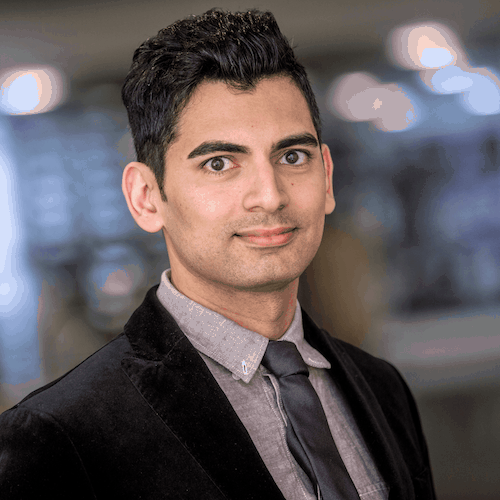

A whopping €16.5 million euro grant has been awarded to a Dutch consortium of leading researchers and organisations through the Large-Scale Research Infrastructure (LSRI) of the Dutch Research Council (NWO). Over the next 10 years, this project will build the world’s largest academic, real-time electromagnetic transient (EMT) simulator to create a virtual power system for cutting-edge experiments that focus on power systems. The consortium is headed by TU Delft Prof. Peter Palensky and includes Rotterdam School of Management, Erasmus University (RSM) Associate Prof. Dr Yashar Ghiassi-Farrokhfal among the eight Dutch research organisations and SURF, the IT cooperative of education and research. Entitled Understanding large and cOmplex Power sYstems (UTOPYS), this project aims to create an advanced digital twin of the electricity grid, thereby ushering in a new era of innovation in power systems research and resilience.
A new era in energy system simulation
The UTOPYS consortium will build the first research infrastructure of its kind anywhere in the world. This state-of-the-art platform will be capable of dynamically representing the full complexity of modern and future energy systems and enable scientists to simulate the energy system of tomorrow before it exists in the real world.
By replicating intricate interactions within the grid, researchers can investigate key challenges such as cyber-physical dynamics, instability risks, controller interactions, swarm behaviour, and potential vulnerabilities in digital networks. These insights can play a crucial role in advancing safe, resilient and efficient energy systems across Europe.
Tackling urgency and uncertainty
As electrification speeds up across transport, heating and industry, energy systems face unprecedented stress. Growing numbers of decentralised renewable energy sources, digital assets, and fluctuating demand are reshaping the way electricity networks operate and are increasing the risk of congestion and instability.
UTOPYS can enable scientists to test alternative system topologies, control strategies, and market mechanisms that can better manage these challenges. The work also addresses the fairness and security of energy distribution, thereby recognising the need for grids that are both equitable and resilient to cyber threats, sabotage and physical disruptions.
By developing a digital twin powerful enough to capture these dynamics, the consortium aims to ensure that Europe’s future grids are equipped to withstand uncertainty and deliver reliable energy for all users.
Driving global leadership and innovation
Building on previous success with smaller digital twin platforms, this new infrastructure is set to elevate Dutch research to a global leadership position. To understand the potential impact, the researchers will model and test entire national systems, as well as technologies not yet in existence.
UTOPYS unites expertise from power systems, computer science, mathematics, energy economics, and law in an interdisciplinary effort. All models and data will be shared openly to promote collaboration and innovation across the research community.
Ranked first among all submissions to the NWO grant programme, UTOPYS represents a landmark investment in large-scale energy research and a decisive step toward shaping the intelligent, secure and sustainable energy systems of the future.
About Dr. Yashar Ghiassi-Farrokhfal
Dr Ghiassi-Farrokhfal is an associate professor in RSM’s department of Technology and Operations Management. Additionally, he serves as academic director of smart energy and sustainability at the Erasmus Centre for Data Analytics (ECDA), RSM academic director at Erasmus Center for Energy Transition, and EUR scientific lead of Centre of Energy System Intelligence (CESI). Dr Ghiassi-Farrokhfal will hire a postdoctoral student to work with and assist him throughout the UTOPYS project.