

Reimagining the digital city
The heart of a city will always be its people, but the digital aspects of the way a city runs are evolving. Rotterdam Citiverse is a concept in which the physical, social and digital dimensions of the city come together. The Citiverse brings together emerging technologies, such as AI and XR, supported by open urban data platforms.
Our Purpose
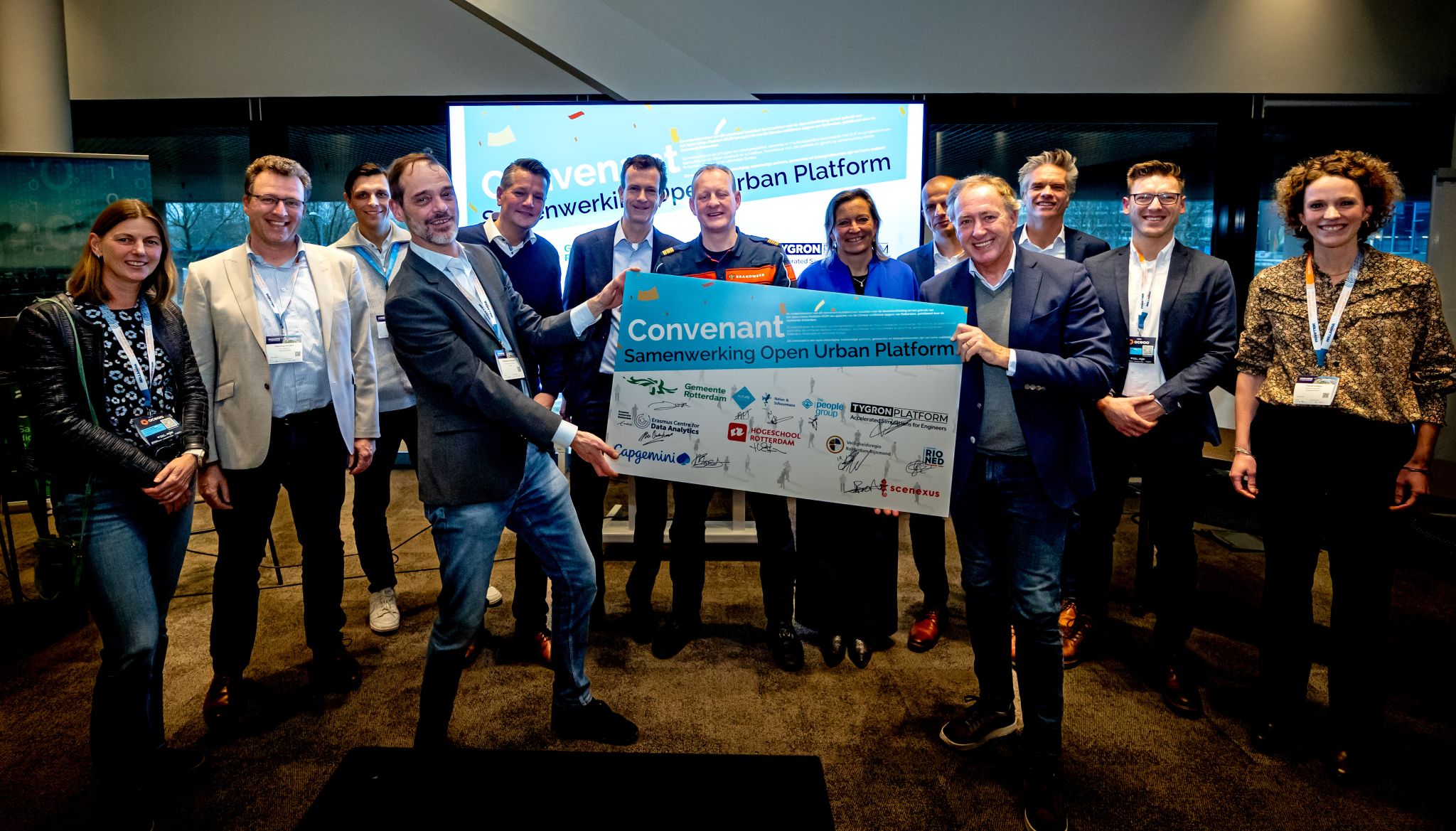
We are proud to partner in this initiative. The project fits our purpose as EUR to support the responsible development of (digital) technologies, deploying them to address societal challenges while considering their ethical, economic and societal impacts. Furthermore, it fits in our longstanding history of collaboration with the City of Rotterdam.
We will involve a wide range of expertise from Erasmus University Rotterdam by involving several of our academic expert practices linked to the 14 building blocks of the Citiverse.
Applied Research
Together with the Erasmus School of Social and Behavioural Sciences, a junior researcher is connected to the Citiverse programme. The aim of the research is to provide context to the Citiverse, to connect the subjects conceptually and empirically, and to evaluate the impact on the city and its citizens based on insights gathered in various workshops and applied projects in a knowledge agenda and vision document. In doing so, we seek an ecological approach in which different arenas with different actors interact with one another, and where we view technology and its environment as interwoven. The empirical context to be investigated is the Rotterdam context; goals such as inclusive growth, co-creation, adaptive infrastructure, and real-time data-driven functioning are considered within the urban ecosystem, where various empirical domains interact and influence one another.
ECDA's Contribution
We are proud to partner in this initiative. The project fits our purpose as EUR to support the responsible development of (digital) technologies, deploying them to address societal challenges while considering their ethical, economic and societal impacts. Furthermore, it fits in our longstanding history of collaboration with the City of Rotterdam.
We will involve a wide range of expertise from Erasmus University Rotterdam by involving several of our academic expert practices linked to the 14 building blocks of the Citiverse.
Applied Research
Together with the Erasmus School of Social and Behavioural Sciences, a junior researcher is connected to the Citiverse programme. The aim of the research is to provide context to the Citiverse, to connect the subjects conceptually and empirically, and to evaluate the impact on the city and its citizens based on insights gathered in various workshops and applied projects in a knowledge agenda and vision document. In doing so, we seek an ecological approach in which different arenas with different actors interact with one another, and where we view technology and its environment as interwoven. The empirical context to be investigated is the Rotterdam context; goals such as inclusive growth, co-creation, adaptive infrastructure, and real-time data-driven functioning are considered within the urban ecosystem, where various empirical domains interact and influence one another.
Rotterdam's Digital Twins
In the traditional model of municipalities, the task of organising digital infrastructure is given to big tech companies. But this forces cities and citizens to accept the conditions set by corporations such as Google and Microsoft, with little space for public oversight.
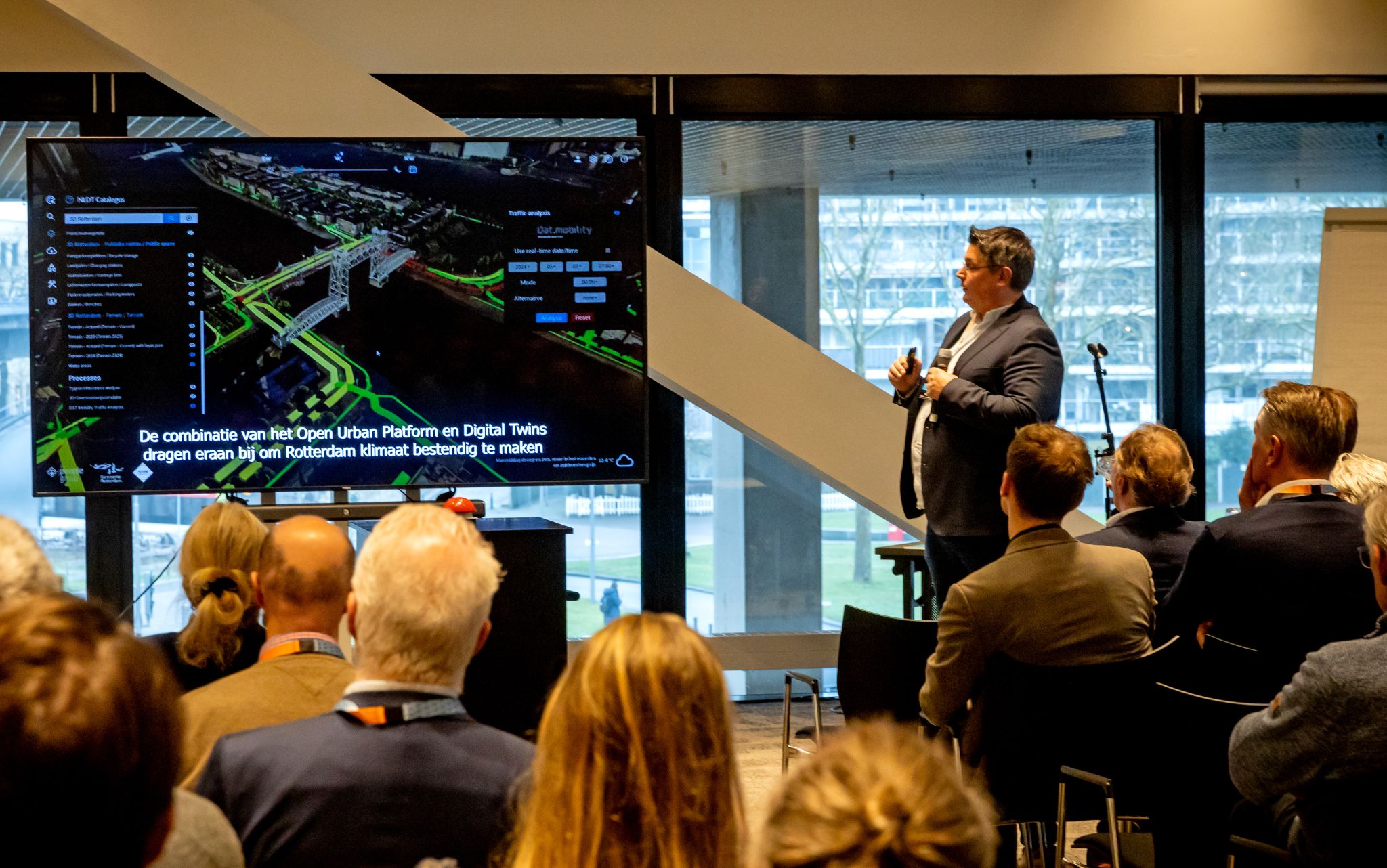
Rotterdam recognises its responsibility to shape its own digital infrastructure. It developed an Open Urban Platform (OUP) in partnership with private organisations, and central to this is the Digital Twin: a 3D model of the city that integrates real-time data to provide insights into urban life. It’s a shareable view of the city’s current state, and it enables stakeholders in different sectors to collaborate. It breaks down silos and fosters cross-disciplinary innovation.
Rotterdam’s digital twin underpins a range of applications, including:
3D information for emergency services
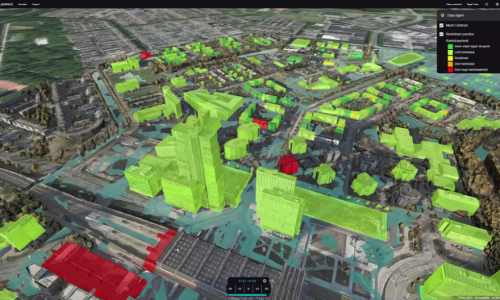
Better than the usual 2D maps, the digital twin has detailed, real-time 3D data for building structures and the risks that might be nearby – like cruise ships moored on the Nieuwe Maas River. This can significantly improve planning and response times.
Eco-system collaboration
Partners contributing data and expertise include automotive manufacturer BMW, housing organisation Woonstad Rotterdam, and the government emergency response organisation Veiligheidsregio Rotterdam-Rijnmond. For example, BMW shares passenger numbers and interior temperature data that helps the emergency services anticipate risks like fires involving electric vehicles in garages.
How it started
The idea was suggested between 2015 and 2016. Early questions focused on what a digital city actually is, the challenges it presents, and the role of the municipality in this transformation. At that time, there was little appetite for municipal involvement. The preference was to leave responsibility to large technology companies.
By 2019, attitudes had shifted. The concepts of digital autonomy and digital sovereignty gained traction, and Rotterdam launched a dedicated Digital City Programme to reclaim a role for the municipality in shaping the digital future. The city’s vision was articulated through the platform www.rotterdam-oup.nl.
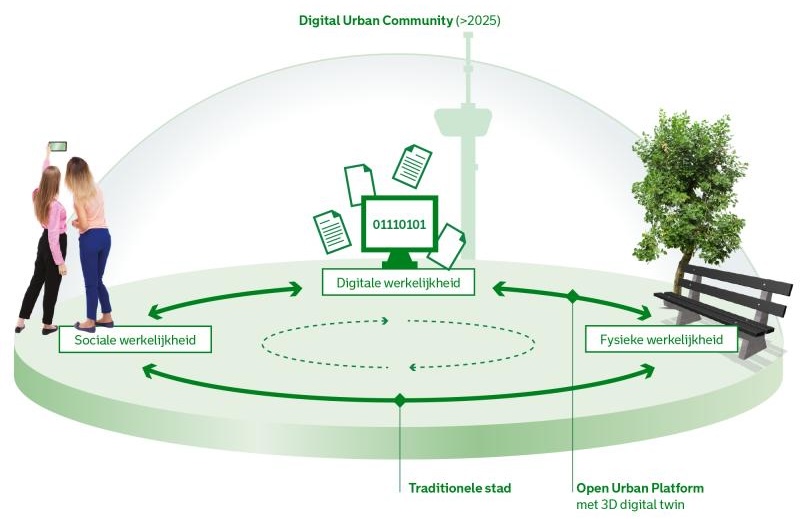
Now, Rotterdam sees itself as an ecosystem where digital, physical, and social realities are no longer separate but interwoven into a single, shared reality.
How it started
The idea was suggested between 2015 and 2016. Early questions focused on what a digital city actually is, the challenges it presents, and the role of the municipality in this transformation. At that time, there was little appetite for municipal involvement. The preference was to leave responsibility to large technology companies.
By 2019, attitudes had shifted. The concepts of digital autonomy and digital sovereignty gained traction, and Rotterdam launched a dedicated Digital City Programme to reclaim a role for the municipality in shaping the digital future. The city’s vision was articulated through the platform www.rotterdam-oup.nl.
Now, Rotterdam sees itself as an ecosystem where digital, physical, and social realities are no longer separate but interwoven into a single, shared reality.
Towards the Rotterdam Citiverse
In the next two years, the Rotterdam Citiverse will take shape. This is part of a broader European and human-centred alternative to the American-led Metaverse, an interconnected network of 3D virtual worlds.
The Citiverse is designed to integrate physical, digital, and social realities. It’s a public-private model that prioritises citizen interests, and combines Rotterdam’s digital twin with extended reality (XR), but aspires to move beyond these technologies to create a holistic ecosystem where people move seamlessly between physical and digital spaces.
It’s key principles are:

Human-centred design that emphasises citizens’ rights, inclusivity, and equality.

Public-private development through co-creation for innovation and accountability.
Holistic impact that recognises that digital developments are interconnected and that there’s a synergy when systems work together.
More Information
Dr. Marcel van Oosterhout
DirectorGefocust op digitalisering, AI en immersieve technologie voor maatschappelijke vraagstukken; meer dan 25 jaar ervaring in projectmanagement
Dr. Rebecca Moody
Associate Professor, Public AdministrationExpert in data governance, urban data ethics and impacts; Academic Director at BOLD Cities and Dean at Erasmus Graduate School of SSH.