

PLAIA
A knowledge Platform for AI and the soft values of Architecture
Photographer: Iris van den Broek
PLAIA
A knowledge Platform for AI and the soft values of Architecture
Photographer: Iris van den Broek
Our Purpose
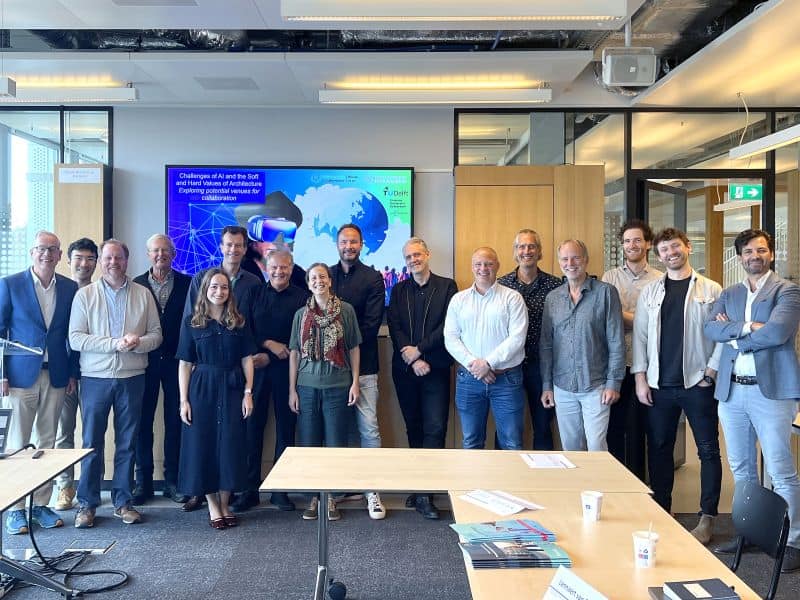
PLAIA investigates how artificial intelligence can be deployed in architectural design without overlooking human, social, and cultural values . In current design practice, AI and digital models are primarily used to optimize technical performance, such as energy consumption, construction, or efficient use of space. So-called ‘soft values’—such as spatial experience, identity, orientation, well-being, and social connectedness—are difficult to quantify and therefore often remain outside these digital processes.
We contribute by bringing expertise in management, cultural theory, social value, data ethics, and AI governance from Erasmus University Rotterdam. Our knowledge will help establish a shared conceptual framework for responsible AI in architecture, strengthening both technological and human dimensions of design.
Our Purpose
PLAIA investigates how artificial intelligence can be deployed in architectural design without overlooking human, social, and cultural values . In current design practice, AI and digital models are primarily used to optimize technical performance, such as energy consumption, construction, or efficient use of space. So-called ‘soft values’—such as spatial experience, identity, orientation, well-being, and social connectedness—are difficult to quantify and therefore often remain outside these digital processes.
We contribute by bringing expertise in management, cultural theory, social value, data ethics, and AI governance from Erasmus University Rotterdam. Our knowledge will help establish a shared conceptual framework for responsible AI in architecture, strengthening both technological and human dimensions of design.
About PLAIA
PLAIA is a project that aims to establish an inter develop an interdisciplinary research platform that integrates architectural, cognitive, social, economic, legal and technical expertise. Additionally, it explores how AI can integrate soft and hard values within architectural design to foster a new, human-centered intelligence. The key question is: How can AI and data-driven methods be developed and applied to bridge the gap between measurable performance and human experience, enabling a design approach that integrates technical efficiency with social, cultural, and emotional value?
This aligns with the Convergence between TU Delft, Erasmus Medical Center, and Erasmus University Rotterdam. We are currently exploring collaborations with Leiden University as well. The knowledge developed in PLAIA will be systematically documented and disseminated through progress reports, visual materials, and online platforms.
Impact
At PLAIA, we combine technology and social sciences to make sure AI acts as a “co-intelligence.” Our goal is to strengthen human creativity and ethical choices, rather than automating them away. By integrating data-driven design with human-centered values, the project fosters an architecture that balances structural performance with identity and belonging.
-
Scientific: Establishing a methodological foundation to integrate qualitative human experience into quantitative AI models.
-
Societal: Promoting human-centered innovation to create environments that prioritise dignity, well-being, and community resilience.
-
Economic: Developing transferable AI methodologies that help the construction industry reconcile technical efficiency with cultural values and ethical standards.
More Information
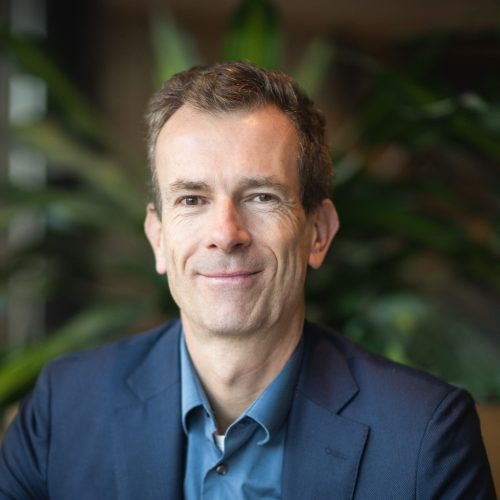
Dr. Marcel van Oosterhout
DirectorFocused on digitalisation, AI, immersive tech for societal challenges; 25+ years in project management, research, and partnership