
How can simple floor plans become editable, realistic, lived-in spaces by combining AI and VR?
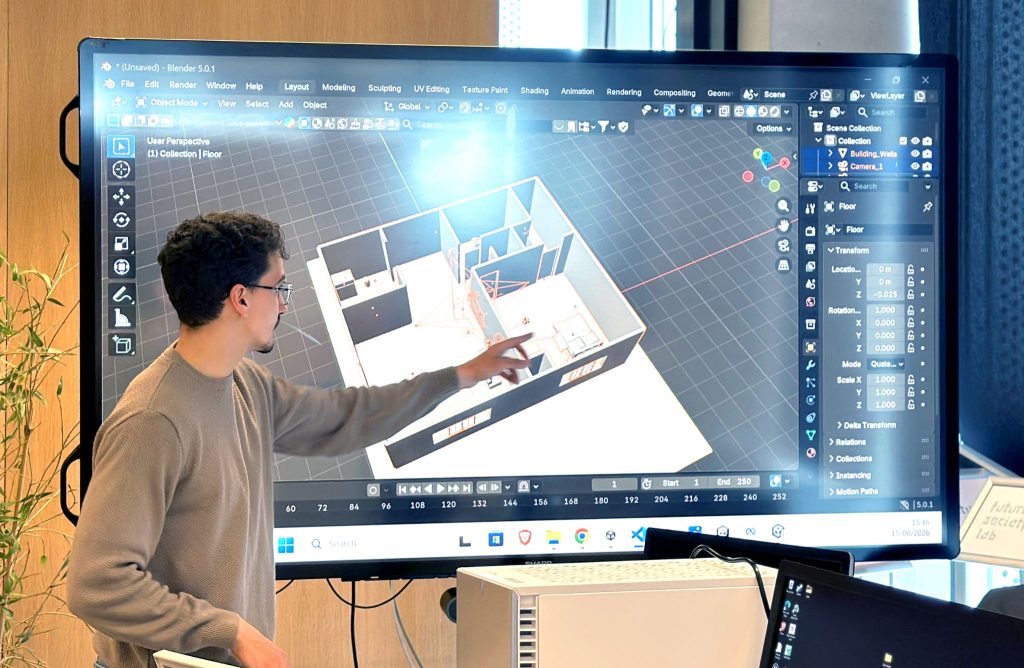
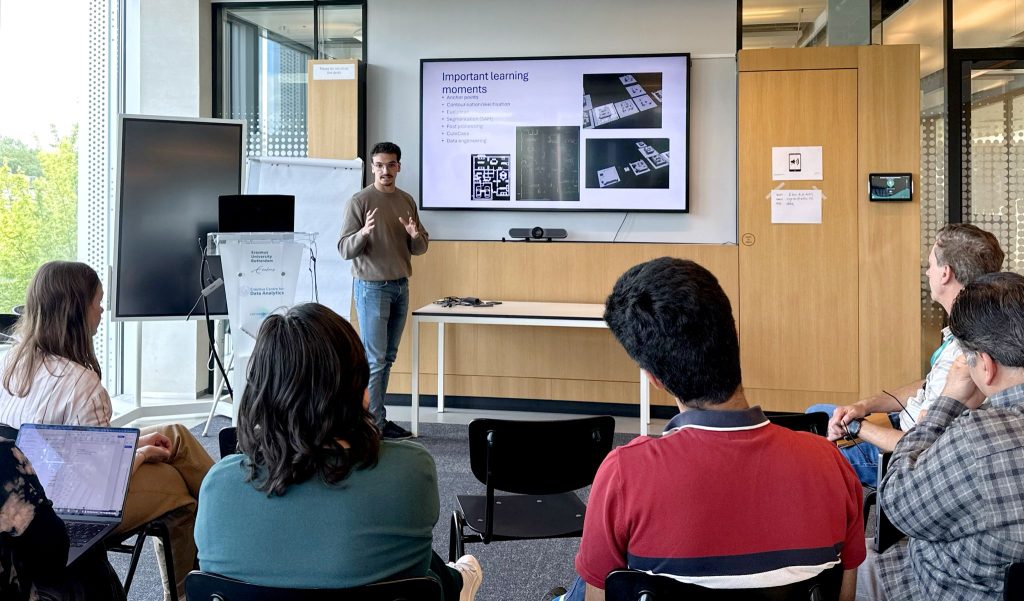
Last week, our intern Zaïd Zerhane presented his project combining architecture, AI, and immersive visualization. He demonstrated to us his AI-driven system that converts floor plans into 3D models, which can then be experienced through VR. 🥽
Key takeaways from the internship
We asked Zaïd what his biggest takeaway was from working with us: “One of the most valuable lessons I learned was the importance of communication, particularly in an interdisciplinary setting. Collaborating with colleagues, experts, and stakeholders provided valuable insights, strengthened the project, and helped me view challenges from multiple perspectives.”
- What needed to be solved: The project addresses several common challenges, including the limitations of traditional 2D floor plans, the effort and software required for 3D reconstruction, and time-consuming design workflows. It also addresses the limited editability of existing AI-driven applications, as well as their lack of readiness for immersive experiences.
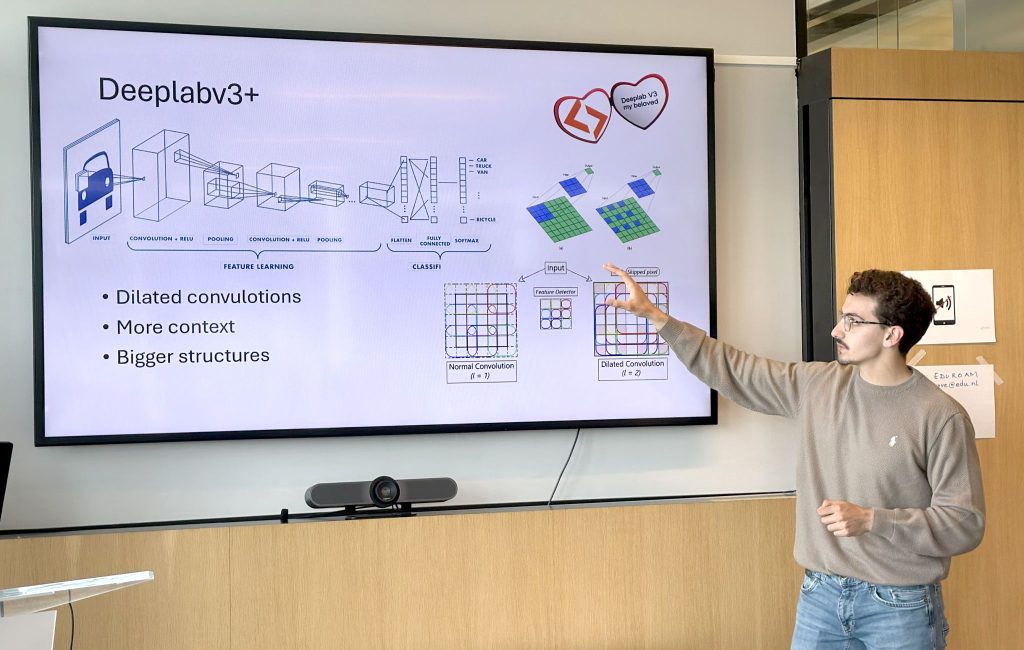
- From floor plans to 3D models: The process developed by Zaïd begins with importing a floor plan as a simple image. A custom AI model, trained on curated and safe, locally contained data, is then used to recognize key architectural elements such as walls, doors, and windows. The system generates accurate geometry using real-world scaling, resulting in an editable 3D model that can be adjusted and refined. The model is already prepared to be experienced via immersive technology.
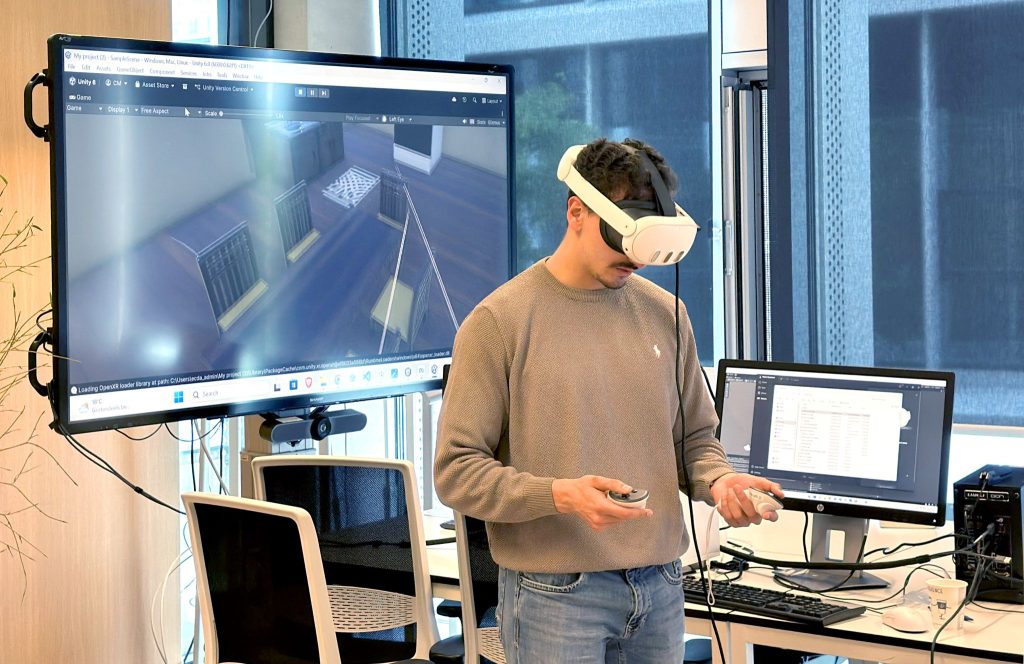
- Stepping inside the design: We stepped into the created model through VR, which completely transformed the perception of scale and space. This experience was further enhanced by the automatic application of materials and textures, along with elements such as furniture, plants, and carpets, creating a realistic sense of a lived-in space.
Thank you, Zaïd, for sharing your project with us. We are proud to support students who experiment with AI and immersive technologies in a hands-on and responsible way, and we are inspired to see how their ideas translate into working prototypes with clear real-world applications. We look forward to exploring potential future use cases together.
Click here to learn more about the Immersive Xperience Lab, updates on AI and immersive experiences.