
How can ideas around AI and the soft values of architecture be turned into practical tools and workflows
While the first PLAIA workshop explored how AI could support the human, emotional, and cultural dimensions of architecture, the second workshop focused on translating these ideas into concrete approaches for the architectural design process.
Workshop II: Defining common ground
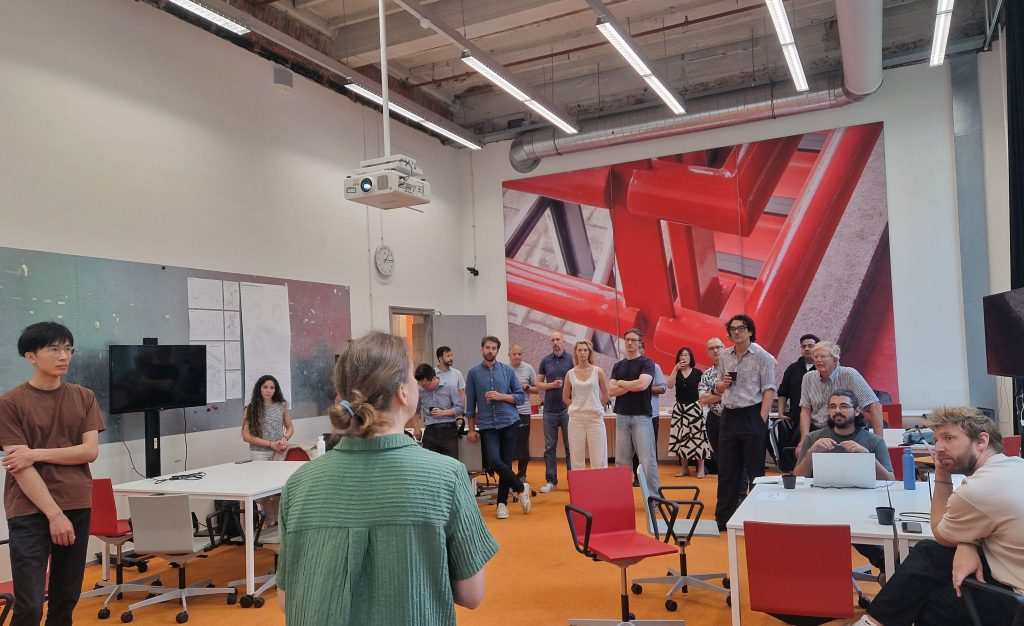
The workshop, held at Delft University of Technology, opened with a lecture from Federica Sanchez, Project Manager & Senior Researcher at Lombardini22. She shared her work on research and development in neuroscience applied to architecture, exploring the connections between how we experience spaces and how they are designed.
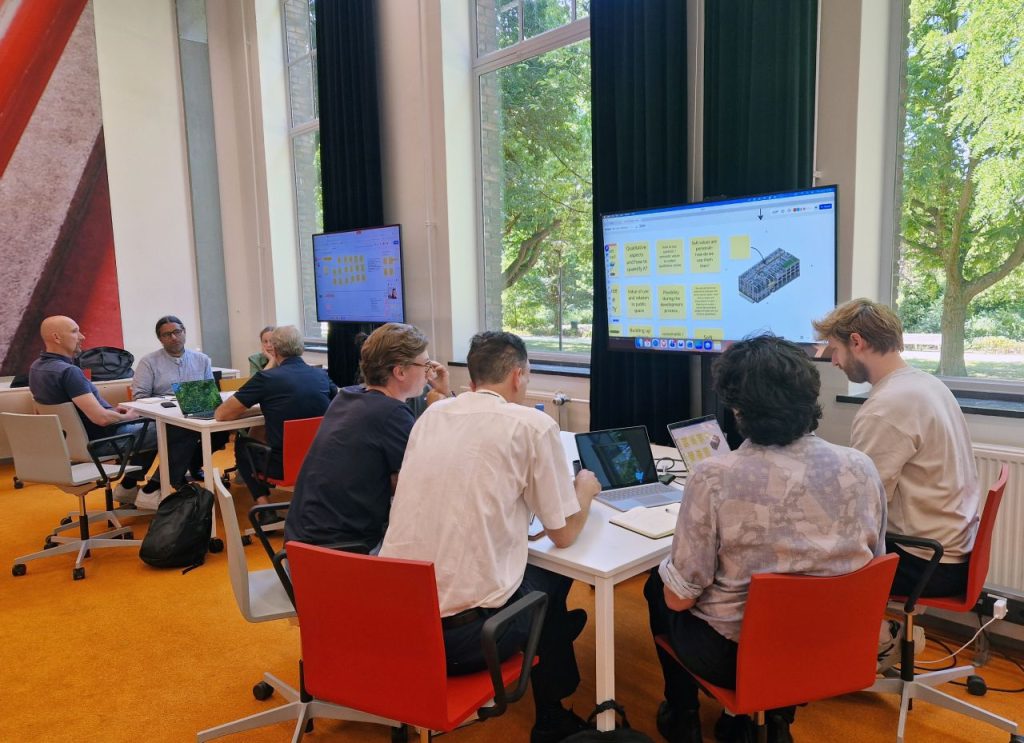
Next, five interdisciplinary teams came together for a four-hour design-research session, working on real architectural case studies. The workshop brought together architects, researchers, and AI specialists to explore how AI and computational tools could support soft values such as spatial experience, social cohesion, and identity in architectural design.
What did we focus on?
- We explored what AI can do today, what it might be able to do in the future, and why ethical considerations need to be part of this development from the start
- We collected resources suggested by the different disciplines, ranging from software and databases to literature and existing research collaborations
- We began developing practical “AI for soft values” workflows that will be further explored in the next workshop
- We discussed co-intelligence in architecture: which parts of the design process architects should keep and why, and which they would rather solve through AI
We look forward to taking this work further and exploring new ways AI can support soft values in architecture.
Are you a practicing architect? Take part in our survey via this link and share how you use computational tools and AI in your design process.
What is PLAIA?
PLAIA (Platform for AI and the Soft Values of Architecture) is an initiative supported by CLICKNL. It brings together researchers, architects, AI and cognitive science experts to explore how computational tools can support human-centered design qualities, like comfort, belonging, identity, atmosphere, social connection, and well-being.
Check our website for updates and insights for the next workshop.